Product Tester UK 2026 – Get Paid to Test Products From Home





Companies rely on product testers and those in product tester jobs in the UK to improve their products and understand their target audience before launch. Product tests are often organised by market research agencies that pay you as a product tester. Payment can be in cash, gift cards, or you simply keep the product after testing. Many large manufacturers also run their own testing panels - their testers are among the first to try new products before they reach the shops.
The range of products is virtually limitless: from cosmetics and food to electronics, apps and household goods. Occasionally, even expensive products like headphones, kitchen appliances or beauty devices are sent out for testing - and you get to keep them. If you want to become a product tester UK-wide or are looking for amazon product tester opportunities, the key is to sign up for as many panels as possible. You can do all of this as a product tester from home - paid product testing fits around any schedule, and many UK testers review products for money on the side.
Table of contents
- Where can I become a product tester?
- What products can you test?
- What is my task as a product tester?
- How much can I earn as a product tester?
- Who can become a product tester?
- How do I get testing assignments?
- Why do companies need product testers?
- Frequently asked questions
- How to get even more free products
This article contains affiliate links. If you sign up through one of them we may earn a commission - the price stays the same for you, and it never influences our assessment.
Where can I become a product tester in the UK?
Two ways to test products in the UK - pick what suits you
|
Online tests & tasks: get paid in cash Apps, games, surveys - up to £182 per test · same-day payouts | start earning today |
|
Physical products: free products by post Cosmetics, food, electronics - keep what you test | 1-4 weeks until first invitation |
Online tests & tasks - get paid in cash
These platforms aggregate online product tests, app testing, surveys and trial offers. You sign up for free and can start earning cash same day - no waiting for products to arrive by post.
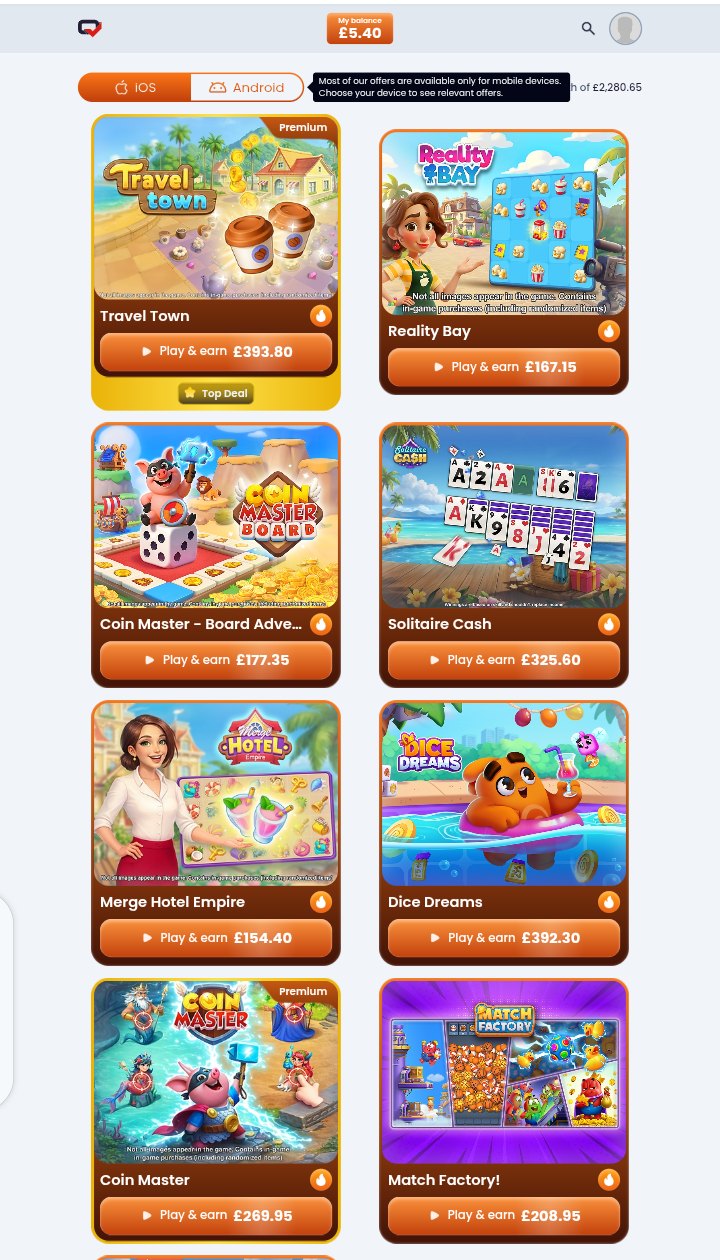
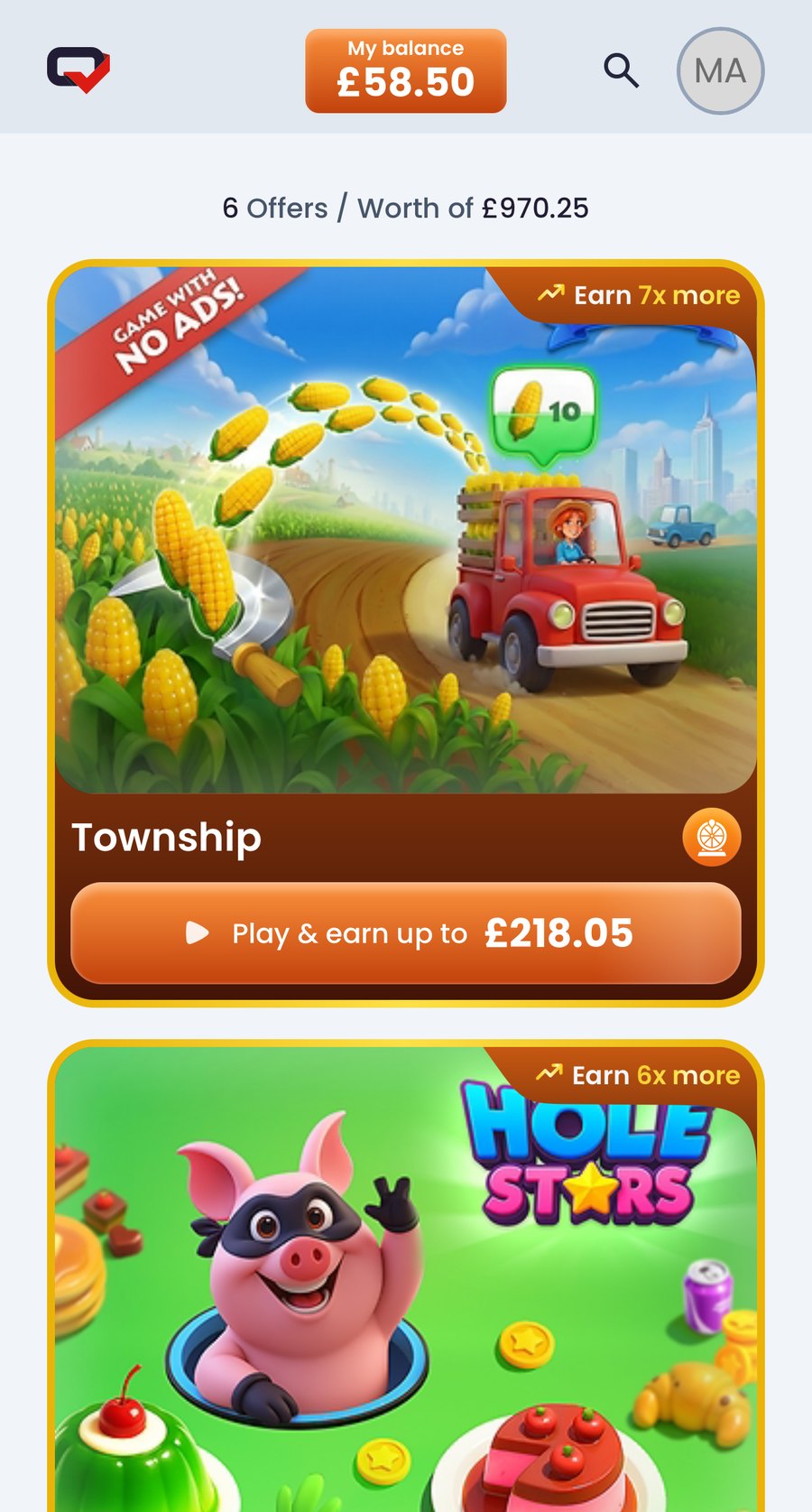
Read the name carefully before you sign up here. Testerup lists app tests, product feedback and paid surveys, and it is run by aestimium GmbH in Hamburg with more than three million users. What a UK account of ours was actually offered across three weeks were mobile game ladders: install a title, play it to a level the platform names, get paid per step in pounds.
That makes it a good earner and a poor fit for one particular reader. If you came to this page to receive products, try them and keep them, this is not that - nothing physical arrived on the wall we saw. If you came to get paid in cash for testing something on your phone, it is one of the better-paying options here, and the amount is on the tile before you install anything.
The catch is the threshold and the clock. Nothing leaves the account below £55, Testerup releases fixed amounts rather than a free sum, and every ladder carries a deadline of three to ten days. In return there is no waiting period on what you have earned: a step credits and it counts straight away.
We ran a UK account on Testerup for three weeks and wrote down every offer that appeared on it, what it asked for and what it paid. Two things stood out, and both matter more on a product testing page than anywhere else. The platform advertises three ways to earn and names paid survey tasks among them, so the catalogue is wider than what we saw. But the wall our tester looked at held mobile games throughout - several of them the same titles that run on other reward platforms - and no physical product to try and keep ever appeared on it. The switch at the top of the wall says the rest: it toggles between iOS and Android, not between product categories. So plan for game ladders, and if you specifically want parcels through the door, use one of the brand panels further down this page alongside it. This is the part that catches people out. Six offers our tester listed one evening had all gone by the next morning, and two of them were back that same afternoon. In his own words: the wall shows one set in the morning and a different set at night. The consequence is practical. A ladder with a seven-day deadline is worth nothing to you if the offer has disappeared by the time you sit down to start it. Start an offer in the session you find it in, not on the day you find it - and do not build a plan around a specific title staying there. Nothing arrives by post. Everything is done on the phone, and the reward is cash rather than the product. The first payout needs £55, paid in fixed amounts, with anything above the sum you choose staying in the wallet for next time. There is no desktop version to look around first. The browser did not let our tester in at any point.What was actually on the offer wall
Freecash is operated by Almedia GmbH (Berlin), founded in 2020. It has over 80 million users worldwide. New testers get an £8 sign-up bonus the moment they open their first offer - no download, not a single level played. You can test apps and games and evaluate trial offers, and cash out via PayPal, crypto or gift cards - PayPal payouts usually arrive the same day.
More online testing platforms
Online product tests for cash - £10 sign-up bonus · up to £170 per test | quick payouts · cash rewards, not physical product trials
Surveys + cashback + product testing - £10 sign-up bonus · £1 payout | 4.0 ★ Trustpilot · 42,000+ reviews
Online product tests & rewards platform - £1 sign-up bonus + up to £198 per task | RapidPay: PayPal in 2 days from £10
Consumer surveys + product tests - £1-£5 per survey · 3 million members | Sainsbury's, M&S, TK Maxx, Amazon gift cards
Free product testing UK - physical products you keep
These platforms send physical products to your UK address. You test the product at home, share feedback, and in most cases keep the product. First invitations typically arrive within 1-4 weeks of registration.
Toluna regularly sends out physical products to UK testers - from food and drinks to cosmetics and tech gadgets. You receive the product at home, test it and share your feedback. In most cases, you keep the product. With 21 million members, Toluna has one of the larger communities, which means you also benefit from other members' reviews and discussion threads.
UK retailer brand panels
Major UK retailers run their own testing panels, sending free products directly to your door. These are some of the more rewarding panels because you typically keep full-size products:
Beauty & skincare brand panels
For beauty enthusiasts, these dedicated brand panels regularly send out cosmetics, skincare and haircare products:
Household & electronics brand panels
These panels focus on higher-value items and everyday household products. The electronics panels in particular can send out items worth several hundred pounds:
Review & share sites (social media testing)
These sites give you free products in exchange for sharing your experience on social media or with friends. Great for anyone with an active social presence:
Free sample box sites
If you prefer surprise boxes of trial products without committing to formal reviews, these sites deliver curated sample boxes:
Cashback-based product testing
With these apps, you buy a product in-store, upload the receipt and get the full purchase price refunded. Effectively free testing - you keep the product:
Amazon Vine - free Amazon products
Amazon Vine is Amazon's invitation-only programme where trusted reviewers receive free products in exchange for honest reviews. You cannot apply directly - Amazon selects reviewers based on the quality and helpfulness of their existing reviews. To increase your chances: write detailed, honest reviews on products you already own. Over time, Amazon may invite you to the Vine programme. Note: since 2024, UK law under the Digital Markets, Competition and Consumer Act makes incentivised fake reviews illegal - Amazon Vine is legitimate because it requires honest, unbiased feedback, but "pay for positive review" schemes are now explicitly banned.
UX and website testing
For those comfortable with webcams and screen recording, UX testing pays some of the strongest per-session rates in product testing:
Passive panels - earn without testing
For absolutely minimal effort, passive panels pay you simply for installing an app or tracking your browsing. No testing required:
What products can you test in the UK?
Among the more popular categories: lipsticks, creams, make-up, nail varnish, hair products and shower gels. Products typically come from brands like No7, L'Oréal, Nivea, The Body Shop and Garnier. Boots and Alba Science panels are particularly strong for this category.
Food testing is common: tea, chocolate, cereal bars, snacks, ready meals and new product flavours. Sensory Dimensions specialises in food testing. Tesco Home Panel sends food items regularly. You typically keep everything you test - brands love testers willing to test new products regularly.
Cleaning products, laundry detergent, kitchen roll, cling film, air fresheners and more. Tesco and Clicks Research frequently send household items. These are everyday products you would buy anyway - testing them means getting them for free.
Developers pay for real user feedback on their apps and games. On Freecash you test apps and games, paid step by step as you reach each level. A smartphone is all you need. This is a popular way to get paid to test products digitally.
Occasionally, high-value tech products are sent out for testing: headphones, smart home devices, kitchen appliances and gadgets. Philips regularly tests shavers, irons and kitchen appliances. Ninja offers testing for blenders and air fryers. With expensive items, the product is sometimes returned or offered at a heavily reduced price after testing.
Relevant for parents: nappies, baby food, toys and children's clothing. Regularly available through Toluna and Tesco Home Panel.
In most cases, you receive products in their original packaging. Occasionally, products are sent as blind tests in neutral packaging so you do not know the brand during testing.
What is my task as a product tester?
Testing new products
Companies send you products before launch to gather feedback from their target audience. You receive the product free of charge and provide a review in return. You evaluate aspects like functionality, appearance, taste, ease of use or quality. Typically you fill in a standardised questionnaire so results can be compared across all testers.
Reviewing existing products
Companies also seek honest reviews of products already on sale. Your task is to post genuine reviews on platforms like Amazon or the retailer's website. This helps other customers make informed purchasing decisions and gives the company valuable feedback.
How much can I earn as a product tester in the UK?
Earnings depend on several factors:
- Time investment: More detailed tests pay more. A 2-minute questionnaire pays less than a multi-day home trial with a written report.
- Product value: The more expensive the product you keep, the lower the additional cash payment tends to be. Keeping a £50 kitchen appliance is itself the reward.
- Target audience fit: If you match a hard-to-find demographic, you are more valuable and the compensation is typically higher.
Typical earnings range: £1-£5 for a short survey-based review, £10-£25 for an in-depth home trial, and up to £50+ for UX testing sessions or clinical trials (Alba Science pays up to £500 for in-person clinical studies in Edinburgh). Digital app and game tests via Freecash pay step by step. In our test, a single task paid up to £16.
On top of cash, you keep free products worth £5-£250+ over the course of a year.
Who can become a product tester in the UK?
In principle, anyone can become a product tester. No specific qualifications are required. You typically need to apply for individual tests by answering a few questions about yourself. The company then selects testers who match the target demographic of the product. The better your profile matches, the more valuable your opinion is to the company - and the more likely you are to be selected.
Most panels require you to be 18 or older and have a UK address. For brand panels like Boots and Tesco, demographic diversity matters - they want a mix of ages, genders and backgrounds that reflects their customer base.
How do I get product testing assignments?
- Sign up for free at multiple panels: Register on as many product testing sites as possible. Answer all profile questions thoroughly - the more detailed your profile, the better your chances of being selected. Companies want testers that closely match the target audience. Some panels show available tests immediately after registration; others send invitations by email.
- Receive the test product: Physical products are posted to your UK address for free (cosmetics, food, electronics). For digital products, you receive a link or download (apps, games). In most cases you keep the product, provided you submit your review within the deadline.
- Submit your review: Companies expect honest feedback - usually via a standardised questionnaire on the panel's website, or as a published review on platforms like Amazon. Occasionally, a social media post or blog review is requested.
Why do companies look for product testers?
- Direct customer acquisition: Companies want potential customers to try the product. Through hands-on experience, testers become fans and future buyers. Particularly effective with everyday items - if you test a deodorant and like it, you buy it every month.
- Word of mouth: Testers who become fans recommend the product to friends and family. Word-of-mouth is one of the more powerful marketing channels.
- Pre-launch validation: Before launching a new product, companies use market research to check whether it resonates with the target audience. Tester feedback is incorporated into the final product.
- Product improvement: Companies continuously develop existing products. Consumer tastes and trends change, so regular tester evaluations help keep products relevant.
- Online reviews: For newly launched products, companies need reviews on retail platforms like Amazon to gain visibility. They send products for testing and ask for honest, published reviews in return.
Frequently asked questions
Product testing is typically a flexible side income rather than a full-time job. Most testers earn between £1-£50 per test plus keep free products. To turn it into more substantial income, sign up for multiple panels and combine cash-paying online tests (Testerup, Freecash, UserTesting) with physical product panels (Boots, Tesco, Toluna). Companies like Philips, Tesco and Boots run their own tester recruitment programmes - you apply directly through their official panel pages. Full-time UX testing roles also exist on platforms like UserTesting.com and TestingTime, where serious testers can earn £30-£70 per session.
To become a product reviewer, sign up for multiple panels (Boots, Tesco, Toluna, Home Tester Club) and complete the profile questions in detail - the more honest data you provide, the more matching invitations you receive. Write thoughtful, detailed reviews on every product you test. Over time, premium panels like Pinecone Research and Amazon Vine may invite you based on review quality. UX testing platforms (UserTesting, TryMyUI) also accept new reviewers immediately.
Testers are selected either randomly or based on profile data - sometimes a combination. From all matching candidates, the company selects a set number. Because your profile is the primary selection basis, keeping it detailed and up to date significantly increases your chances.
Product testing is free. Legitimate panels never charge you. You only need your own internet connection. If a site asks for payment, avoid it - it is not genuine.
Physical products are posted to your UK address for free. You typically keep the product after submitting your review. For digital products (apps, games, streaming services), you receive a download link or access code.
Most panels give you 14 days to submit your review. You usually receive a reminder after 7 days. Always complete reviews on time - late submissions may affect future invitations.
In most cases, yes. Physical products are yours to keep after submitting your review. For particularly expensive electronics, the product may be returned or offered at a heavily reduced price. The terms are always stated before you agree to test.
This depends on how many panels you have joined, how well your profile matches the target audience, and how actively you seek out opportunities. The more panels you register with, the more invitations you receive. Some testers report receiving products every week; others every few weeks.
Cash payments range from £1-£50 per test, with UX and clinical trials paying more. On top of cash, you keep free products worth £5-£250+ per year. Digital app and game tests via Freecash pay step by step. In our test, a single task paid up to £16.
The total value depends on how many panels you join and how actively you participate.
The UK has a Trading Allowance of £1,000 per tax year. If your total side income (including product testing) stays below this, no tax is due. Products you keep for personal use are generally not taxable. Above £1,000 in cash earnings, register as self-employed with HMRC. For specific questions, check with HMRC or a tax adviser.
How to get even more free products in the UK
Free product samples
Many companies give away free samples to encourage trial. Think sample-size skincare, mini cereal boxes and sachets of cleaning products. You can find these through sites like FreeStuff.co.uk and LatestFreeStuff.co.uk - simply browse, click and request samples delivered to your door.
Cashback and try-for-free offers
With cashback promotions, you buy a product in-store, upload your receipt to the promotion website and receive a full refund. These are commonly run by food and personal care brands launching new products. Check GreenJinn and Shopmium for current UK offers.
Competitions and giveaways
Companies regularly give away products in large quantities - often hundreds or thousands of items - when launching something new. The chances of winning are relatively high for these promotions. Follow your favourite brands on social media and check sites like SuperLucky.me for current UK competitions.
Start as a product tester today
Free to join · No experience needed · Keep the products you test
- Paid Surveys UK: Up to £12/hr with the right platforms
- Make Money Online UK: 20 tested ways to earn from home
- Freecash Review UK: Is Freecash legit? Our honest verdict
- Swagbucks Review UK: Earnings, payouts & our verdict
- Money-Making Apps UK: Best apps to earn money on your phone
- Free Money UK: Sign-up bonuses, switch offers & freebies
- Side Hustle UK: Side income ideas alongside your main job
How we tested
Who tested this for us





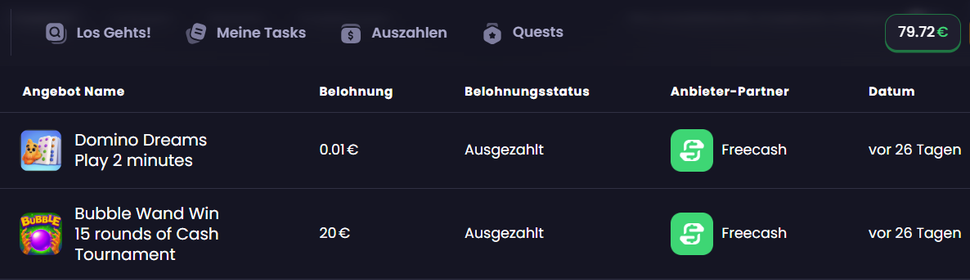
Product testing means two different things, and this page keeps them apart. One kind posts you an item and pays you in the item itself; the other pays cash for work done on a phone or a laptop. The second kind we do ourselves: a UK account, the tasks actually completed, the payout followed to the end. Every figure we print from that side of the page was copied off a live screen, never from a brochure.
The accounts belong to testers we pay, each working from their own country on their own phone or computer, and each staying inside the platform's terms: one signup per person, no VPN, no emulators, and no second account helping the first. There are eighteen of us across five countries, and every screenshot above came off one of those devices.
Where a platform sits on this page is decided by what we have done on it. Anything we have run an account on comes before anything we know only from its published terms, however generous those terms sound. After that we weigh how often testers are actually picked, what a completed job pays, how long the first reward takes to arrive, and how the platform behaves when you ask for your money.
Two things we will not put a number on. How often you personally get selected: brand panels open and close campaigns without notice, and an average would dress up a lottery as a schedule. And what is on an offer wall today - the notes above show six offers gone by the next morning, two of them back by the afternoon. So we name an offer to show how the mechanism works, and it is the mechanism we describe in detail: the ladder, the deadline, the payout. That part stays put.
Where the testing stands. Getting an account from signup to money in hand takes weeks per platform, and the parcel programmes take longer still, because a selection has to happen first. The entries with a test-notes box are the ones we have already been through, screenshots and dates included. The rest are set out from their entry requirements, their published terms and what their members report in public, which is how they should be read.
We earn a commission when someone signs up through this page. It bought nothing here: the platform whose offer wall we take apart hardest above is one of the links we are paid for.
* This article contains affiliate links. If you click an affiliate link, European Funding Guide may receive a commission. The price or offer does not change for you.

Dr. Mira Maier is Editor-in-Chief of European Funding Guide and has been writing about scholarships and study financing since 2012.